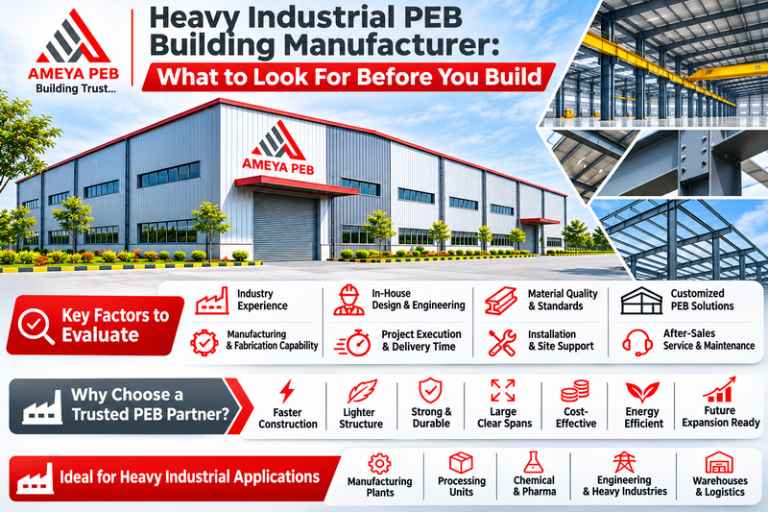
Heavy industries such as steel plants, foundries, heavy engineering units and power equipment makers cannot afford a building that is merely “good enough.” Their structures carry cranes, vibrating machinery and heavy process loads every day. Choosing the right heavy industrial PEB building manufacturer is as important as the design itself.
What makes a heavy industrial PEB different?
A standard PEB shed is built for light loads. A heavy industrial one is engineered for much more:
- Stronger primary frames: Deeper built-up columns and rafters with thicker plates
- Crane support: Crane beams, brackets and gantry columns designed for EOT cranes of higher capacity
- Fatigue-resistant design: Connections that handle repeated crane movement
- Heavy-duty cladding and roofing: Thicker sheets, insulation and ventilation for heat-producing processes
- Mezzanines and platforms: Support for equipment floors and walkways
What to check in a manufacturer:
- Design capability: In-house engineers using recognized structural software and design codes
- Own fabrication unit: Control over steel quality, welding and coating
- Crane experience: Past projects with comparable crane capacity and span
- Quality certifications and testing: Material test reports and weld inspection records
- Coating options: Protection suited to heat, moisture or chemical exposure
- Erection support: Trained site crews and clear project timelines
- Warranty and after-sales service: Written terms, not verbal promises
Why it matters: A poorly designed heavy structure can lead to frame deflection, crane misalignment, costly shutdowns and safety risks. A capable manufacturer reduces these risks from the first drawing.
Tip: Before requesting quotes, prepare your crane capacity, span, eave height, wind and seismic zone, and expansion plans. Accurate inputs lead to accurate pricing.