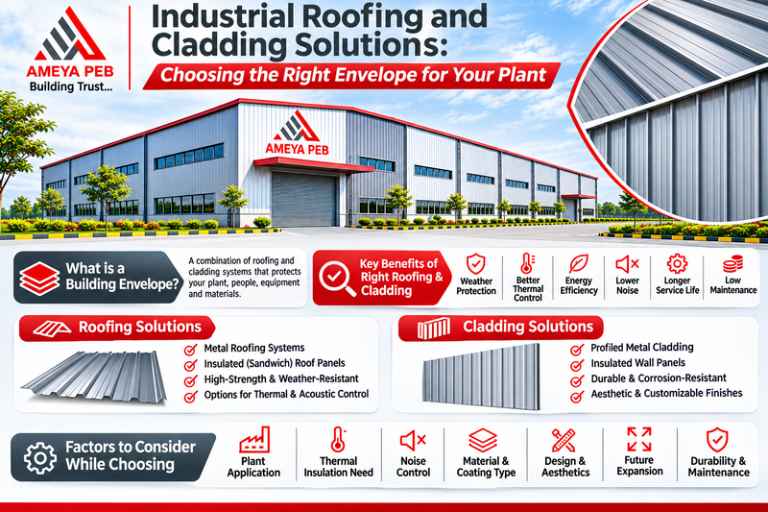
The roof and walls of an industrial building do more than keep rain out. They control heat, noise, moisture and energy use, and they protect the machinery and people inside. Getting roofing and cladding right can lower running costs for decades.
Common roofing and cladding options
- Profiled metal sheets: Galvanized or coated steel sheets are strong, light and quick to install. They are the most common choice for PEB structures.
- Aluminium sheets: Naturally corrosion resistant and lighter, suited to humid or coastal locations.
- Insulated sandwich panels: Two metal skins with a PUF, PIR or mineral wool core. Ideal for cold storage, food and pharma units.
- Double-skin systems: Two sheet layers with insulation between them, offering thermal and acoustic control at a moderate cost.
- Translucent sheets: Fiberglass or polycarbonate panels that bring in daylight and reduce lighting bills.
Features worth adding
- Insulation: Reduces heat gain in summer and keeps process temperatures stable.
- Ridge ventilators and louvers: Let hot air and fumes escape naturally.
- Skylights: Typically placed along the roof to cut daytime electricity use.
- Gutters and downspouts: Handle heavy monsoon rainfall without leaks.
- Anti-condensation coating: Prevents dripping inside humid facilities.
How to choose
- Climate: Heat, rain, wind and humidity levels at your site
- Process type: Furnaces, chemicals or cold rooms need different specifications
- Coating quality: Check coating thickness and the warranty against corrosion
- Fire rating: Confirm the panels meet applicable safety requirements
- Maintenance: Look for fastener quality, sealants and easy access for inspection
Tip: Leaks usually start at joints and fasteners, not the sheet itself. Ask about the installation method and sealing details, not just the sheet thickness.